Outcome Statement from the Regional Conference on Information and Communication Rights in Africa
Windhoek, Namibia - June 2, 2023
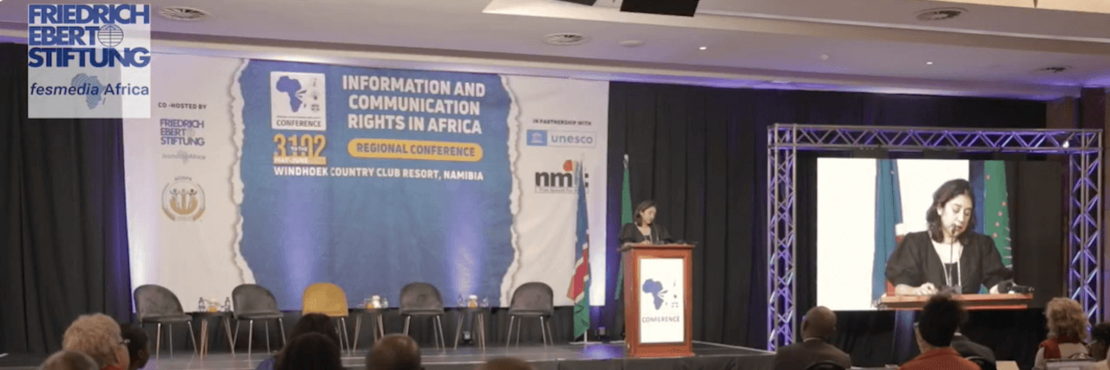
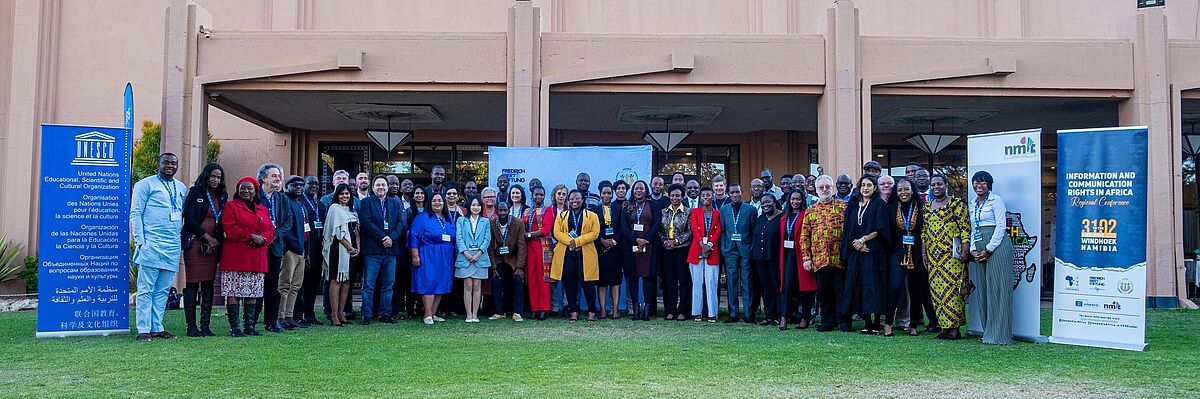
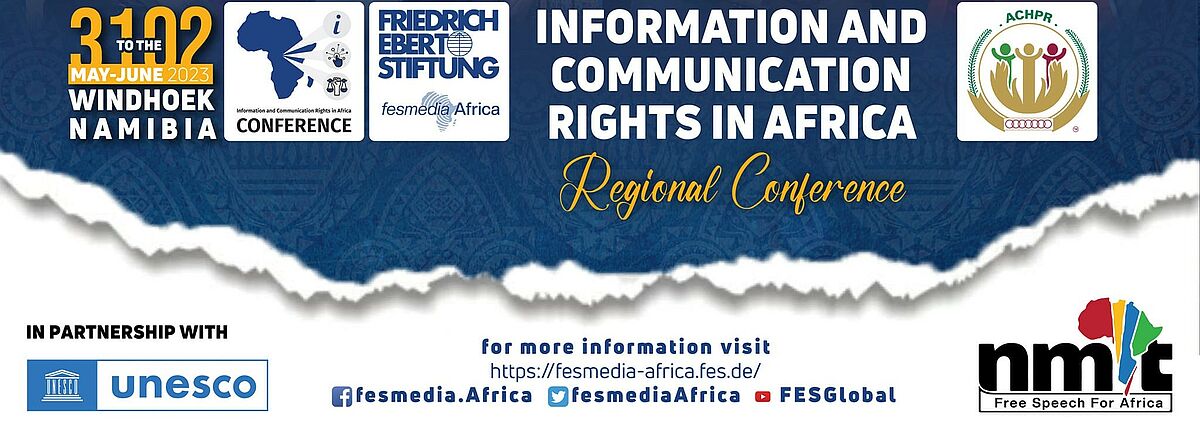
The participants of the Regional Conference on Information and Communication Rights in Africa held in Windhoek, Namibia, from May 31 to June 2, 2023, reaffirm the significance of information and communication rights in enhancing democracy, upholding human rights, and driving socioeconomic development in Africa. Convened by Fesmedia Africa and the African Commission on Human and Peoples’ Rights, in partnership with the United Nations Educational, Scientific and Cultural Organisation (UNESCO) and the Namibia Media Trust (NMT) and representing various stakeholder groups, including inter-governmental organisations, Parliament, civil society, media, academia and other sectors, from 16 countries in Africa, we are motivated by a common need to engender an equitable and effective information and communication rights framework on the continent.
We recognise the profound influence of information and communication technologies (ICTs) and the urgent need to guarantee equitable access to information and communication rights for all people as a necessary condition for the full exercise and enjoyment of the right to freedom of expression, and as a catalyst for inclusive growth, sustainable development and transparent governance.
We recognise varying and intersecting forms of challenges and discrimination that arise in the pursuit of advancing information and communication rights, and are committed to solutions that are capable of reflecting intersectionality and affording more inclusive and responsive protections to those who find themselves at the intersecting axes of discrimination.
We recognise that our continent is getting younger and that if we want a sustainable, inclusive, and diverse media landscape, voices of children, youth and other socially marginalised peoples must be included in the development of responses and solutions to contemporary challenges. Moreover, the special protection afforded to children must be respected, protected and promoted by all stakeholders including digital platforms, the media and government, as we work towards the advancement of information and communication rights of future generations.
In recent years, significant efforts have been made to solidify the concepts of Information as a Public Good and Journalism as a Public Good. These initiatives recognise the crucial role journalism and the media play in fostering a vibrant civic sphere and ensuring that citizens have access to reliable, evidence-based information.
We have identified four major themes around which we propose to shape our interventions with relevant stakeholders, namely Digital Rights, Access to Information, Data Protection, as well as Media Diversity and Viability.
Digital Rights
We observe that the continent has witnessed significant growth in internet coverage, paving the way for remarkable opportunities for access to information and the availability of tools for political mobilisation, leading to greater citizen participation in development processes at the national level.
However, this potential has been hampered by limited internet penetration, high cost of access to Internet, and other digital tools, and digital illiteracy. These challenges prevent 57 percent of Africans from harnessing the potential of digital technologies. Non-transparent costing systems remain a critical issue especially for persons with disabilities resulting in a digital divide that disproportionately affects socially marginalised communities, exacerbating existing inequalities and limiting people from the ability to exercise their digital rights, particularly in accessing information and participation in and on online platforms.
Expectedly, in such a context, discrimination is manifesting in various forms, such as online harassment and hate speech, and exclusion of voice and agency from digital spaces. Furthermore, safety and surveillance concerns are impacting digital rights while mass surveillance programmes, data breaches, and censorship practices are restricting the ability of many members of society in our different countries, from communicating freely and expressing dissenting opinions without fear of retribution.
Access to Information
Africa has made some significant strides on the issue of access to information at the continental level with the African Union having adopted 6 instruments that recognise the right to information while 27 countries have adopted comprehensive access to information laws, with 17 others having draft laws at different stages of enactment. Of the countries with access to information laws, only 14 have clear oversight mechanisms that offer opportunities for enhancing implementation and conducting public awareness among different actors, including legislators, journalists and citizens.
The remaining 13 countries with national access to information laws lack clear oversight mechanisms which undermine efforts at ensuring effective implementation and enforcement.
However, implementation and enforcement of the law is hampered by bureaucratic practices, capacity constraints, poor record keeping practices and inadequate budgetary considerations for enforcement mechanisms, while citizens and media lack the requisite knowledge and capacity to utilise ATI laws effectively.
The Model Law on Access to Information for Africa remains a valuable resource for countries to effectively and impactfully adapt to their own context.
A timely and complementary endeavour centered around Access to Data would be of significant relevance to both the public and private sectors, and form part of efforts to address Africa’s low datafication status. By advocating for Access to Data alongside access to information, African nations can assert their position in the global data landscape and contribute to their overall development and democratic progress.
Data protection
Although the Malabo Convention (African Union Convention on Cyber Security and Personal Data Protection) provides a legal framework for addressing cybercrime and data protection in Africa, only 15 African countries have formally ratified the Convention. Presently 36 out of 55 countries in Africa have comprehensive data protection laws.
However, most Africans continue to experience incidents of breach of personal data as levels of digital literacy are low and the processes for beneficial utilisation of the laws for protection, are too complex for them to understand.
Media Diversity and Viability
Media ownership concentration poses a critical challenge to diversity and viability. A few entities controlling a significant portion of the media landscape restricts agency, and limits voices, perspectives and content, resulting in biased reporting and underrepresentation of socially marginalised peoples and communities.
The decline of local journalism has led to a loss of community-focused reporting and accountability. Misinformation and disinformation further fragment the media landscape, eroding trust and polarizing public discourse. Lack of diversity within newsrooms contributes to a narrow range of perspectives and limited coverage of relevant issues.
Financial sustainability is also a pressing issue, as traditional business models struggle to adapt to the digital age, impacting the quality of reporting. Addressing these challenges requires a comprehensive approach encompassing media policy, regulation, public funding, technological innovation, and media literacy. Promoting diversity, local journalism, fact-checking, and ensuring economic viability are vital for a healthy media environment serving the public interest.
Thus,
AFFIRMING the principles enshrined in the Universal Declaration of Human Rights (UDHR), particularly Article 19, which recognises the right to freedom of opinion and expression, we commit to upholding these principles in the context of information and communication rights in Africa;
BUILDING UPON the International Covenant on Civil and Political Rights (ICCPR), which protects the right to freedom of expression, we commit to ensuring that African citizens can exercise this right without undue restrictions. We acknowledge the importance of promoting a free and pluralistic media landscape that fosters democratic governance and accountability;
GUIDED BY the African Charter on Human and Peoples’ Rights, we affirm the rights enshrined therein, including the right to freedom of expression and information (Article 9), and the right to participate (Article 13). We commit to respecting and promoting these rights, acknowledging that they are essential for the realisation of just and equitable societies in Africa;
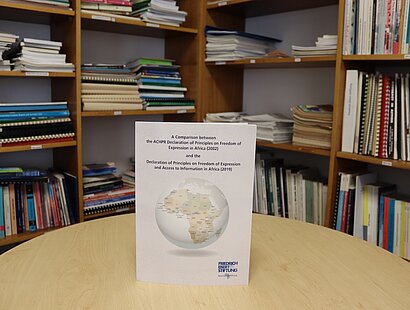
DRAWING INSPIRATION from the Declaration of Principles on Freedom of Expression and Access to Information in Africa 2019, we commit to implementing and promoting these principles, which provide comprehensive guidelines for the protection and promotion of freedom of expression, access to information, digital rights, and the safety of journalists on the African continent;
RECALLING the 1991 Windhoek Declaration on Promoting an Independent and Pluralistic African Press, we reaffirm our commitment to promoting a free, independent, and pluralistic media environment. We recognise the role of media in fostering democracy, good governance, and public access to information, and we commit to creating an enabling environment that supports the work of journalists and media professionals;
RECOGNISING the Windhoek+30 Declaration on Information as a Public Good that serves as a rallying call for action, advocacy, and collaboration, we pledge to work individually and collaboratively towards ensuring that information is treated as a public good, accessible to all, and contributes to the advancement of democracy, development, inclusion, and social justice;
RECOGNISING the 2023 Joint Declaration on Media Freedom and Democracy by the United Nations Special Rapporteur on the Promotion and Protection of the Right to Freedom of Opinion and Expression, the Organisation for Security and Co-operation in Europe (OSCE) Representative on Freedom of the Media, the Organisation of American States (OAS) Special Rapporteur on Freedom of Expression and the African Commission on Human and Peoples’ Rights (ACHPR) Special Rapporteur on Freedom of Expression and Access to Information in Africa, which outlines the interrelationship and inter-dependency of media freedom and democratic values, and the critical role of media freedom in enabling and sustaining democratic societies.
AFFIRMING the Malabo Convention (African Union Convention on Cyber Security and Personal Data Protection) which provides a legal framework for addressing cybercrime and data protection in Africa;
RECALLING the 2013 Marrakesh Treaty to Facilitate Access to Published Works for Persons Who Are Blind, Visually Impaired, or Otherwise Print Disabled which creates a set of mandatory limitations and exceptions for the benefit of the blind, visually impaired, and otherwise print disabled (VIPs);
APPRECIATING the immense value of the Model Law on Access to Information for Africa as a pivotal instrument for the development or enhancement of access to information legislation, we commend to all African countries as an indispensable guide, and a standardised blueprint that enables countries to adopt or tailor their access to information frameworks, to foster consistency and harmonisation across the continent;
EMBRACING the principles of the African Platform on Access to Information (APAI) Declaration which provides a roadmap for the development of robust legal frameworks, we encourage countries to adopt it as a guide in developing and implementing instruments that recognise access to information in all its many dimensions.
ACKNOWLEDGING the Guidelines on Access to Information and Elections in Africa of the African Commission for Human and Peoples’ Rights and its crucial role in promoting transparent, inclusive, and accountable electoral processes.
UPHOLDING the principles of the African Declaration on Internet Rights and Freedoms which provides a comprehensive framework for the protection of human rights in the digital sphere and its ambition to contribute to the development of policies, practices, and regulations that foster an inclusive, open, and rights-respecting digital environment in Africa;
We urge UNESCO to ensure that ongoing discussions on their Guidelines for Regulating Digital Platforms include clear processes that would ensure fair compensation for news sources by digital platforms to ensure the viability of the news media
We pledge to work with various stakeholders to advance information and communication rights in Africa. Hence, we call on:
1. United Nations Educational, Scientific and Cultural Organisation (UNESCO):
1.1 to strengthen the monitoring of SDG indicator 16.10.2;
1.2 to build and raise the profile of the International Day for Universal Access to Information (IDUAI), to become an effective global platform for influencing information and communication rights nationally and globally, particularly the notion of Information as a Public Good, as well as Journalism as a Public Good;
1.3 to deepen its engagement with Governments and digital platforms and ensure the scrupulous application of its guidelines on the regulation of digital platforms;
1.4 to support actors in enhancing media, information and digital literacy;
1.5 to ensure that the finalisation of Draft Guidelines for Regulating Digital Platforms (Internet for Trust) include clear processes to ensure transparency on deployment of algorithms in relation to news content, and fair compensation for news sources by digital platforms, to ensure the viability of the news media.
2. African Commission on Human and Peoples’ Rights:
2.1 to undertake promotional and fact-finding missions to targeted countries to encourage states to submit their Periodic State Reports and promote information and communication rights;
2.2 to promote the adoption, review and implementation of access to information laws in line with the Model Law on Access to Information for Africa;
2.3 to encourage member states to use the 2019 Declaration of Principles on Freedom of Expression and Access to Information as a guide in preparation and state reporting to the Commission on the status of realisation of Article 9 of the African Charter;
2.4 to urge member states to urgently adopt new or amend existing laws taking guidance from the Model Law on Access to Information for Africa.
3. African Governments:
3.1 to guarantee the autonomy, independence and adequate resourcing of the institutions and bodies that implement and oversee access to information;
3.2 to urgently develop and submit their periodic reports to the African Commission on Human and Peoples’ Rights, as required by Article 62 of the African Charter on Human and Peoples’ Rights;
3.3 to enact and implement comprehensive access to information laws in line with the Model Law on Access to Information for Africa;
3.4 to urgently review and amend policies and laws that are inimical to information and communication rights;
3.5 to implement the African Commission Resolution ACHPR/Res. 362(LIX) 2016 on the Right to Freedom of Information and Expression on the Internet in Africa and Resolution ACHPR/Res. 522(LXXII) 2022 on the Protection of Women Against Digital Violence in Africa to address surveillance, data and privacy infringements, disinformation and hate speech, online violence against women journalists, women human rights defenders and politicians, internet disruptions and censorship;
3.6 to foster understanding and awareness among duty bearers including government officials, law enforcement agencies and judicial bodies, about the importance of access to information and journalists’ safety and the detrimental impact on impunity. This will involve targeted educational initiatives, capacity building programmes and public awareness campaigns to promote a culture of transparency and respect for media freedom;
3.7 to urgently implement Resolution ACHPR/Res. 473 (EXT.OS/ XXXI) 2021 on the use of Artificial Intelligence (AI), Robotics and Other New and Emerging Technologies in Africa;
3.8 to urgently reform, review and enforce election laws and practices in line with the Guidelines on Access to Information and Elections in Africa, and ensure compliance by relevant election management bodies and other relevant stakeholders;
3.9 to allocate adequate resources to strengthen ICT infrastructure, enhance information, media and digital literacy programmes, and ensure universal access to affordable and reliable internet connectivity, particularly in underserved areas and communities;
3.10 to actively promote and enable marginalised, local, and community media that cater to community needs, utilise local languages, highlight underrepresented issues, and offer unique local perspectives on mainstream topics;
3.11 to pursue fair and equitable revenue sharing by digital platforms to sustain the viability and long-term sustainability of journalism and media organisations;
3.12 to, along with their respective competition authorities, design public policy mechanisms that oblige digital platforms - particularly intermediaries - and news publishers to operate competitively, to investigate alleged anti-competitive conduct by digital platforms with a view to ensuring fair and equitable revenue sharing by these platforms for media viability and sustainability;
3.13 to ratify the Malabo Convention and prioritise the enactment of laws and policies that adopt a human-rights based approach to cybersecurity and data protection, thus ensuring the protection of individuals’ privacy, promotion of digital rights, and the establishment of a secure and trustworthy digital ecosystem that upholds the rights and freedoms of all users;
3.14 to pursue African-wide cooperation on the regulation of digital markets in line with the African Continental Free Trade Area (AfCFTA) consultations; competition policy, IPR, and digital trade.
4. Digital Platforms, the Private Sector and Development Partners
4.1 to make resources available for independent journalism and support public interest media in their efforts to monetise digital content as a way of nurturing a viable media ecosystem in Africa;
4.2 to partner with the African Union, UNESCO, governments, media organisations, and civil society to establish collaborative initiatives that address the safety of women, journalists, including training programmes, safety protocols, and support mechanisms;
4.3 to enhance transparency by providing clear and comprehensive information about their algorithms, content moderation policies, and data practices. This will enable users to understand the basis of content recommendations, ensure accountability, and address potential biases and manipulation;
4.4 to implement robust measures to combat disinformation and misinformation. This includes promoting fact-checking initiatives, collaborating with independent factcheckers, and prioritising authoritative sources of information and news in the public interest;
4.5 to enhance content moderation practices to take into account regional and national social, cultural and linguistic particularities to support the swift identification and appropriate treatment of harmful content, while ensuring transparency and consistency in the application of community guidelines;
4.6 to prioritise user privacy and strengthen organisational and technical data protection measures, and undertake to develop and implement accountability measures for action taken by each data controller;
4.7 to promote innovative business models that sustain journalism in the digital age and actively collaborate with and support independent journalism;
4.8 to utilise an intersectionality approach to prioritise efforts to bridge the digital divide and ensure equal access to information. This includes expanding internet connectivity, particularly in underserved areas and communities, and developing user-friendly platforms that cater for diverse populations, including persons with disabilities;
4.9 to adopt responsible advertising practices to prevent the dissemination of false or misleading advertisements. This includes stringent verification processes, transparent disclosure of sponsored content, and measures to combat ad fraud;
4.10 to establish working relationships with digital platforms and Internet Service Providers (ISPs) to utilise anonymised data to guarantee user safety and security;
4.11 to encourage digital platforms to develop transparent and accessible governance structures that allow review and appeals against their content moderation procedures and decisions.
4.12 to take actions to deepen electoral integrity, including conducting timeous human rights impact assessments prior to election periods, and engaging, supporting, and participating in multistakeholder initiatives to combat potential online harms;
4.13 to foster growing commitment to long-term, locally-led, participatory approaches to media development;
4.14 to strengthen approaches to international cooperation focused on support to journalism and media sector institutions with well tested and innovative funding strategies;
4.15 to ensure consistency within international assistance that underpin norms of media independence, freedom, and viability.
5. Civil Society Organisations:
5.1 to promote inclusive access to information that ensures equitable access to information for everyone, including indigenous, socially marginalised groups, persons with disabilities, women, gender diverse persons, youth and rural-based communities;
5.2 to promote the protection of information and communication rights, including through strategic litigation, monitoring and reporting on violations, and engaging in peoplecentred public awareness campaigns;
5.3 to collaborate with governments, media, and other stakeholders to develop and implement initiatives that promote information, media and digital literacy, digital skills development, and online safety for all citizens;
5.4 to use the International Day for Universal Access to Information, Open Data Day and the Data Protection Day to raise awareness on the importance of access to data for sustainable development;
5.5 to utilise the ACHPR Guidelines on Access to Information and Elections in Africa in the deployment of local and regional election observer teams, to ensure transparency and accountability;
5.6 to monitor the implementation and promotion of information and communication rights and engage national, regional and international mechanisms, among them the United Nations Special Mandates, United Nations Human Rights Council and United Nations Economic and Social Council, African Peer Review Mechanism, African Commission on Human and Peoples’ Rights and Special Technical Committees of the African Union, to ensure they have the information they require to engage duty bearers;
5.7 to collaborate with development partners and the legal fraternity at national, regional and international levels to actively provide financial and technical support for the protection and promotion of information and communication rights.
6. Media Organisations:
6.1 to apply and uphold ethical guidelines, promote professional journalism, and ensure editorial independence, thereby contributing to the diversity and plurality of voices and the free flow of information;
6.2 to prioritise the safety and protection of journalists and media practitioners, particularly by implementing mechanisms for reporting threats, providing comprehensive safety and security training, provision of protective kits for journalists covering protests and other conflict situations, and advocating for legal protections for media workers;
6.3 to develop and enhance self-regulatory mechanisms that uphold professional standards and address issues of media accountability and transparency;
6.4 to take proactive measures to tackle internal structural discrimination and bias within the media sector. This includes promoting gender equality and equity, ensuring representation of women and other socially marginalised peoples in managerial and decision-making roles, and implementing robust internal policies and independent mechanisms against harassment and discrimination;
6.5 to take proactive steps in identifying and challenging harmful stereotypes. Media outlets should actively combat disinformation, hate speech, discriminatory norms, negative prejudice, and biased attitudes in their coverage and reporting. This includes promoting professional journalism, fostering inclusive narratives, and promoting positive social change through accurate and balanced reporting;
6.6 to develop and sustain fact-checking desks as vanguards against disinformation;
6.7 to strive for transparency by clearly disclosing when AI is utilised in content creation or distribution.
6.8 to actively address and mitigate biases that can be present in AI algorithms. Careful attention must be given to the training data used, ensuring it is linguistically and culturally representative of African peoples and perspectives and avoids reinforcing existing biases. Regular audits and assessments of AI systems should be conducted to identify and correct any unintended biases;
6.9 to develop editorial guidelines to ensure that AI-generated content aligns with journalistic standards and values that encourage credibility of established news gathering and production practices;
6.10 to review and verify AI-generated content before publication, ensuring accuracy and minimising the risk of misinformation;
6.11 to prioritise the protection of user data and maintain robust security measures when utilising AI technologies. Strict data privacy protocols should be followed, adhering to relevant laws and regulations to safeguard user information and maintain public trust.
Windhoek, Namibia
June 2, 2023